

Trying to lose weight, but nothing seems to work? You’re not alone. Many people struggle because they follow extreme diets or complicated plans that are hard to maintain.
The truth is that weight loss does not have to be extreme or confusing. You don’t need to starve yourself or cut out entire food groups. What matters most is building simple habits that you can follow consistently.
In this guide, you will learn a clear, step-by-step approach to weight loss that focuses on long-term results rather than quick fixes.
Table of Contents
Step 1: Create a Small Calorie Deficit
Weight loss is mainly about consuming fewer calories than your body uses. However, many people make the mistake of being too aggressive at the start.
Instead of drastically cutting calories, aim for a small and sustainable deficit.
What to do:
- Track your daily calorie intake
- Reduce it by around 300–500 calories
- Focus on steady progress instead of fast results
Why this works:
A small calorie deficit is easier to maintain. It allows your body to adjust gradually and helps you avoid burnout.
Simple ways to start:
- Replace sugary drinks with water or low-calorie alternatives
- Reduce portion sizes slightly
- Choose whole foods over processed snacks
What to avoid:
- Extreme dieting
- Skipping meals
- Eating too little
👉 The goal is to build consistency, not to rush the process.
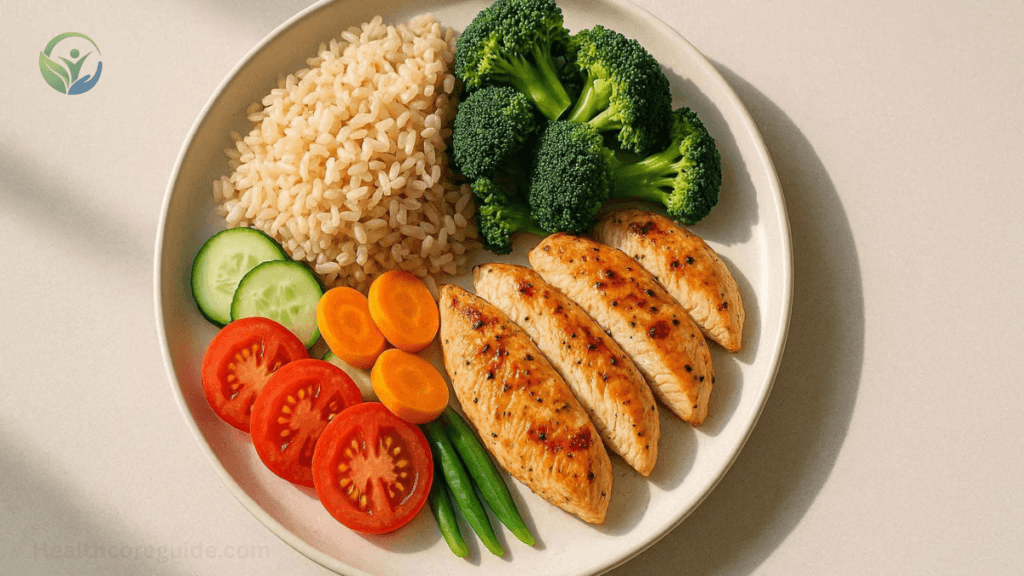
Step 2: Focus on Whole, Nutrient-Dense Foods
The quality of your food plays a major role in how your body responds to a diet.
Whole foods are generally more filling and may help support better eating habits.
Prioritize:
- Protein sources (chicken, eggs, fish, yogurt)
- Fibre-rich foods (vegetables, fruits, whole grains)
- Healthy fats (olive oil, nuts, seeds)
Why it matters:
- Protein may help you feel full longer
- Fibre may support digestion and appetite control
- Whole foods can help reduce overeating
Limit:
- Fast food
- Sugary snacks
- Highly processed meals
👉 If you find it difficult to manage hunger or cravings, some supplements may help support appetite control and overall balance.
👉 You can explore supplements that will aid your weight loss in our full guide: ➔Best Weight Loss Supplements

Step 3: Stay Active Throughout the Day
You don’t need to spend hours in the gym to make progress. Daily movement can make a significant difference over time.
Start with simple habits:
- Walk 7,000 to 10,000 steps per day
- Take the stairs instead of the elevators
- Stay active during your daily routine
Optional (but helpful):
- Strength training 2–3 times per week
- Light cardio such as cycling or jogging
Why movement matters:
- It may help increase calorie expenditure
- It may support metabolism
- It may help maintain muscle during weight loss
👉 The key is to stay consistent, even with small actions.
Step 4: Improve Sleep and Manage Stress
Sleep and stress are often overlooked, but they play an important role in weight management.
Poor sleep may:
- Increase hunger signals
- Reduce energy levels
- Make it harder to stay consistent
Aim for:
- 7–8 hours of sleep per night
- A consistent sleep schedule
Reduce stress by:
- Taking regular breaks
- Limiting screen time
- Spending time outdoors
👉 Better sleep and lower stress can support your overall progress.

Step 5: Build Habits You Can Maintain
Many people fail not because their plan is wrong, but because it is too difficult to follow.
Instead of trying to be perfect, focus on building small habits that fit your lifestyle.
Focus on:
- Consistency over perfection
- Small daily improvements
- Long-term progress
What to expect:
- Some weeks will show more progress than others
- Results take time
👉 Long-term habits are more effective than short-term effort.

Step 6: Stay Hydrated
Water plays an important role in many processes in the body.
Drinking enough water may help support overall health and can also make it easier to manage appetite.
Simple tips:
- Drink water regularly throughout the day
- Replace sugary drinks with water
- Have a glass of water before meals
👉 Staying hydrated is a simple habit that can support your routine.
Step 7: Be Patient With Your Progress
Weight loss is not always linear. Some days or weeks may feel slower than others.
This is completely normal.
Keep in mind:
- Progress can vary from week to week
- Consistency matters more than speed
- Sustainable habits lead to better results
👉 Focus on long-term improvement rather than quick outcomes.
Step 8: Track Your Progress
Tracking your progress can help you stay motivated and understand what is working for you.
You don’t need to track everything perfectly, but having some form of measurement can make a difference.
Ways to track progress:
- Weigh yourself 1–2 times per week
- Take progress photos every few weeks
- Track your workouts and daily steps
Why this helps:
Tracking allows you to see patterns over time. Even if the scale does not change every day, you may still be making progress in other ways.
It can also help you stay consistent, because you become more aware of your habits.
👉 Keep in mind that progress is not always visible immediately. Focus on long-term changes instead of short-term results.
Step 9: Keep Your Plan Simple
One of the biggest mistakes people make is overcomplicating their weight loss plan.
You do not need a complicated routine to see results.
Keep it simple:
- Follow a basic calorie deficit
- Eat whole, balanced meals
- Stay active every day
Why simplicity works:
Simple plans are easier to follow consistently. When something becomes part of your routine, you are more likely to stick with it.
👉 The best plan is the one you can follow long-term.
Common Mistakes to Avoid
- Eating too little
- Skipping meals
- Relying only on supplements
- Expecting immediate results
👉 Sustainable weight loss is built over time.
Frequently Asked Questions
How fast can I lose weight safely?
A gradual rate (around 0.5–1 kg per week) is generally considered sustainable.
Do I need supplements?
Not necessarily, but some may support your routine when used properly.
What is the best approach to weight loss?
A balanced combination of nutrition, movement, and consistency.
Final Thoughts
Losing weight does not have to be complicated. By focusing on simple habits, staying consistent, and avoiding extreme approaches, you can build a routine that works for you.
The key is to stay patient and focus on long-term progress.
Disclaimer
This article is for informational purposes only and does not constitute medical advice. Always consult a qualified healthcare professional before making changes to your diet, exercise routine, or supplement use.
Other articles
If you want extra support, you can also check our guide on Best Weight Loss Supplements.