
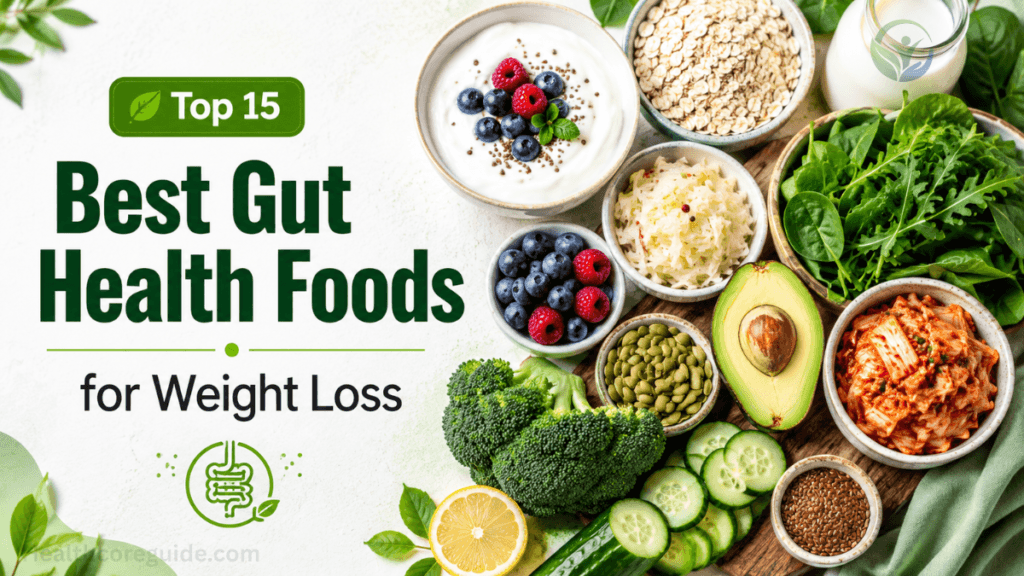
The foods you choose during your weight loss journey can make a big difference in how easy your routine feels, how satisfied you stay after meals, and how consistent you can be over time.
Weight loss is not only about eating less. It is also about choosing foods that help you feel full, support digestion, provide steady energy, and make it easier to avoid highly processed foods and sugary snacks. That is where gut health becomes important. Choosing the right gut health foods can make your meals more filling and easier to repeat.
A healthy gut can support digestion, regular bowel movements, and overall digestive comfort, especially when your meals include enough fiber, protein, whole foods, healthy fats, and water.
When your meals are built around simple, nutrient-dense foods, it becomes much easier to stay consistent with your weight loss routine without feeling like you are following an extreme diet.
The goal of this guide is to show you simple gut health foods that also fit into a weight loss routine.
You can find more tips on how to get rid of fat in our article about: How to Lose Weight For Beginners
Table of Contents
Why Gut Health Matters for Weight Loss 🧠
Gut health and weight loss are connected because your digestive system plays an important role in how your body processes food, handles digestion, and responds to your daily eating habits.
When your diet is low in fiber and high in highly processed foods, it can become harder to feel full, stay consistent, and maintain a comfortable digestive routine.
Gut-friendly foods are usually helpful for weight loss because they are often rich in nutrients that support fullness, digestion, and better long-term eating habits.
These foods usually include:
- Protein
- Fiber
- Vegetables
- Fruits
- Whole grains
- Legumes
- Fermented foods
- Healthy fats
The goal is not to eat perfectly. The goal is to build meals that are simple, filling, and easy to repeat.
What Makes a Food Good for Gut Health and Weight Loss? 🍽️
The best foods for weight loss and gut health usually have something in common: they are filling, nutrient-dense, and easy to include in a consistent routine.
They help you build meals that feel satisfying without relying on extreme restrictions or complicated diet rules.
- They are high in fiber 🌾
Fiber helps with fullness and digestion. It can slow digestion, support regular bowel movements, and make meals feel more satisfying.
Fiber-rich foods are also useful because they usually take more time to eat and digest, which can help you feel more in control of your meals.
- They contain protein 🍗
Protein helps make meals more filling and supports muscle maintenance, especially if you are also exercising or trying to stay active.
Adding protein to your meals can make it easier to stay satisfied and avoid unnecessary snacking later in the day.
- They are nutrient-dense 🥦
Nutrient-dense foods provide vitamins, minerals, antioxidants, and other important nutrients without adding too many unnecessary calories.
These foods help your meals feel more balanced and can make your weight loss routine easier to follow.
- They are easy to eat consistently ✅
The best foods are not always the most complicated or expensive ones.
The best foods are the ones you can realistically add to your meals often and stick with long-term.
Best Foods for Gut Health and Weight Loss
1. Greek Yogurt 🥣
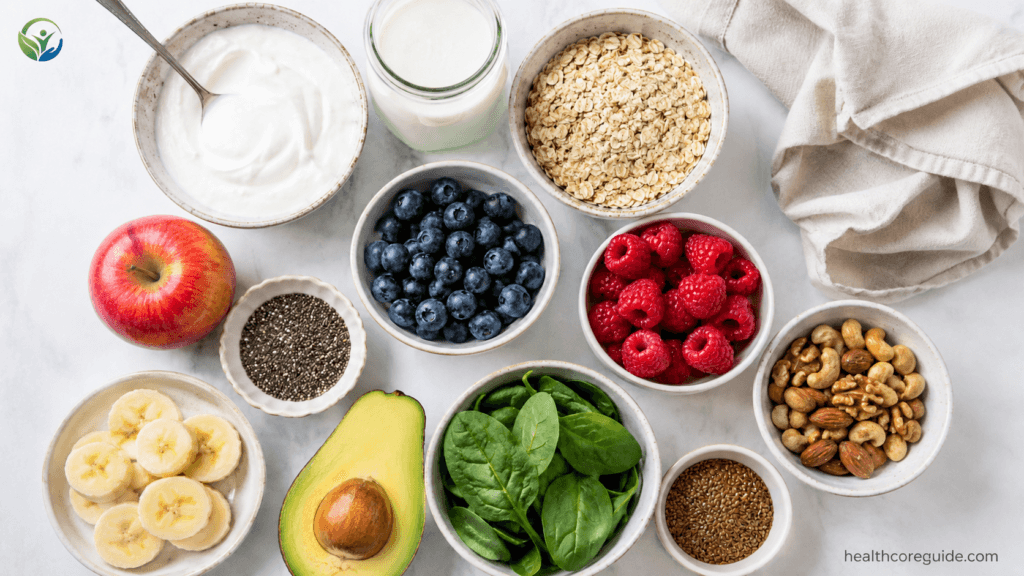
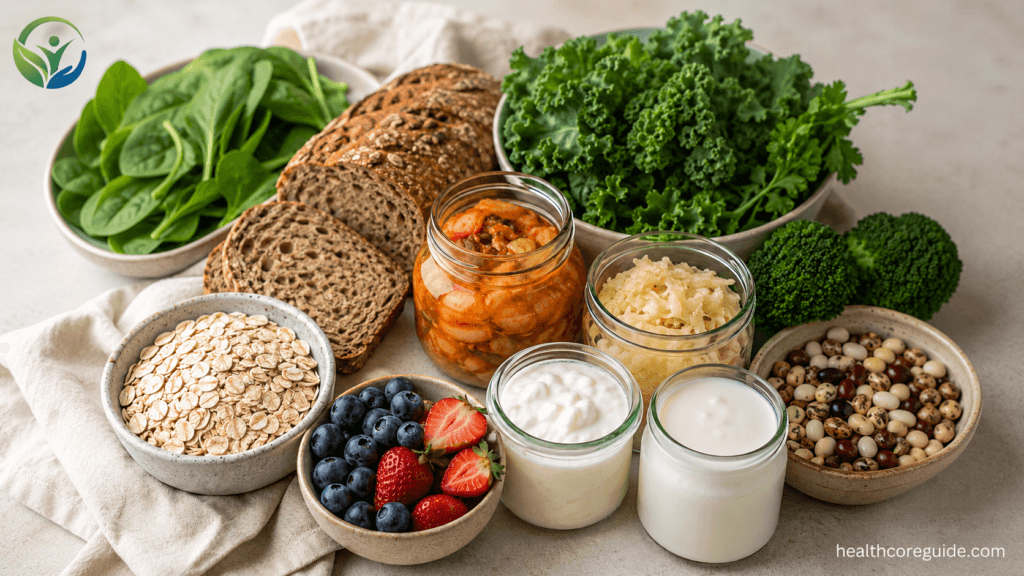
Greek yogurt is high in protein and can be a simple, filling option for breakfast or a snack. It works well with berries, oats, chia seeds, flaxseed, or a small amount of nuts.
Plain Greek yogurt is usually the better choice because it helps you reduce extra sugar while still giving you a creamy and satisfying meal option.
You can use it in breakfast bowls, smoothies, sauces, or as a healthier replacement for some high-calorie toppings. This makes Greek yogurt one of the easiest gut health foods to use in a beginner-friendly routine.
2. Kefir 🥛
Kefir is a fermented dairy drink that can fit well into a gut-friendly routine. It is often used in smoothies, breakfast bowls, or simply as a drink on its own.
Because kefir can contain added sugar depending on the brand, it is better to choose lower-sugar options when possible.
If you are new to fermented foods, start with a small serving and see how your body responds.
3. Oats 🌾
Oats are an affordable, fiber-rich food that can help meals feel more filling and balanced. They are a great option for breakfast because they are easy to prepare and can be combined with berries, chia seeds, flaxseed, Greek yogurt, cinnamon, or a small amount of nuts.
Oats are useful because they are simple, budget-friendly, and easy to repeat throughout the week.
Oats are also one of the most affordable gut health foods because they are simple, filling, and easy to prepare.
If you want a more detailed meal plan, read: 7-Day Meal Plan
4. Berries
Berries are naturally sweet, rich in fiber, and lower in calories compared with many highly processed snacks. Good options include blueberries, strawberries, raspberries, and blackberries.
They are easy to add to Greek yogurt, oats, smoothies, salads, or healthy desserts.
Berries are also helpful because they give you sweetness without needing to rely on candy, pastries, or sugary snacks.
5. Apples 🍎
Apples are simple, affordable, and easy to use as a healthy snack. They contain fiber and water, which can help make snacks feel more satisfying.
Apple slices with a small amount of peanut butter can be a good combination because you get natural sweetness, fiber, and healthy fats in one snack.
Just keep the peanut butter portion moderate because it is calorie-dense.
6. Chia Seeds 🌱
Chia seeds are rich in fiber and can help make meals more filling. You can add them to yogurt, oats, smoothies, or chia pudding.
They absorb liquid and create a thicker texture, which can make breakfast or snacks feel more satisfying.
If you are not used to eating a lot of fiber-rich foods, start with a smaller amount and increase slowly.
7. Flaxseed 🌿
Ground flaxseed is easy to add to oats, smoothies, yogurt, or homemade healthy snacks.
It provides fiber and healthy fats, which can support digestion and help make meals more satisfying.
Ground flaxseed is usually easier to use than whole flaxseed because it mixes well into different meals.
Start with a small amount and drink enough water when increasing fiber intake.
8. Lentils 🍲
Lentils are one of the best simple foods for supporting both weight loss and gut-friendly eating because they contain fiber and plant-based protein. They are filling, affordable, and easy to use in soups, bowls, salads, and stews.
Lentils can help make meals feel more complete without needing expensive ingredients.
They are also a good option for people who want more plant-based meals in their routine.
That makes lentils a strong choice for people who want gut health support and better meal consistency.
9. Beans
Beans are filling, affordable, and high in fiber. Black beans, kidney beans, chickpeas, and white beans are all good options.
You can add them to salads, wraps, rice bowls, soups, or homemade meal prep recipes.
Beans are useful because they give you both fiber and plant-based protein, which can help make meals feel more satisfying. Beans are another simple option for adding more gut health foods to your weekly meals.
10. Leafy Greens 🥬
Leafy greens are low in calories and high in nutrients, making them easy to add to a weight loss meal plan. Spinach, lettuce, kale, and arugula can add volume to meals without adding many calories.
They work well in salads, wraps, omelets, smoothies, and rice bowls.
Adding leafy greens is an easy way to make meals look bigger and feel fresher.
11. Broccoli 🥦
Broccoli is filling, high in fiber, and easy to add to many meals. It pairs well with chicken, salmon, eggs, turkey, rice bowls, or simple meal prep plates.
Broccoli is useful because it adds volume, texture, and nutrients without making meals complicated.
You can steam it, roast it, stir-fry it, or add it to bowls and salads.
12. Sauerkraut 🥬
Sauerkraut is fermented cabbage and can be a gut-friendly addition to meals. It has a strong flavor, so a small amount is usually enough, especially if you are new to fermented foods.
When possible, choose refrigerated options with live cultures.
You can add sauerkraut to bowls, salads, wraps, or simple protein meals for extra flavor.
13. Kimchi 🌶️
Kimchi is a fermented vegetable dish with a bold and spicy flavor. It can be added to rice bowls, eggs, chicken meals, salads, or simple meal prep dishes.
Because kimchi can be spicy and salty, it is best to start with a small portion.
If you are sensitive to spicy foods, introduce them slowly and choose milder options when possible.
14. Salmon 🐟
Salmon is rich in protein and healthy fats, which can make meals more satisfying. It works well with vegetables, rice, potatoes, quinoa, or whole grains.
Salmon can be a good option for people who want a filling meal that still feels simple and balanced.
Because it is calorie-dense compared with very lean proteins, portion size still matters.
15. Avocado 🥑
Avocado contains healthy fats and can make meals more filling and satisfying. It works well in salads, on toast, in wraps, in bowls, or as a topping for eggs and lean proteins.
Because avocado is calorie-dense, portion size matters.
A small amount can add flavor, texture, and healthy fats without making the meal too heavy.
Foods to Limit for Better Gut Health and Weight Loss ❌
You do not need to eat perfectly to make progress, but it helps to limit foods that are low in nutrients and easy to overeat. These foods can make it harder to stay full, control portions, and keep your routine consistent.
Try to limit:
- Sugary snacks
- Fried foods
- Sugary drinks
- Highly processed meals
- Low-fiber refined carbs
- Heavy sauces and dressings
- Excess alcohol
You do not have to remove these foods forever. A better approach is to eat them less often, keep portions controlled, and focus most of your meals on whole, filling foods. Limiting highly processed foods can make it easier to stay consistent with a gut health routine.
How to Build a Gut-Friendly Weight Loss Plate 🍽️
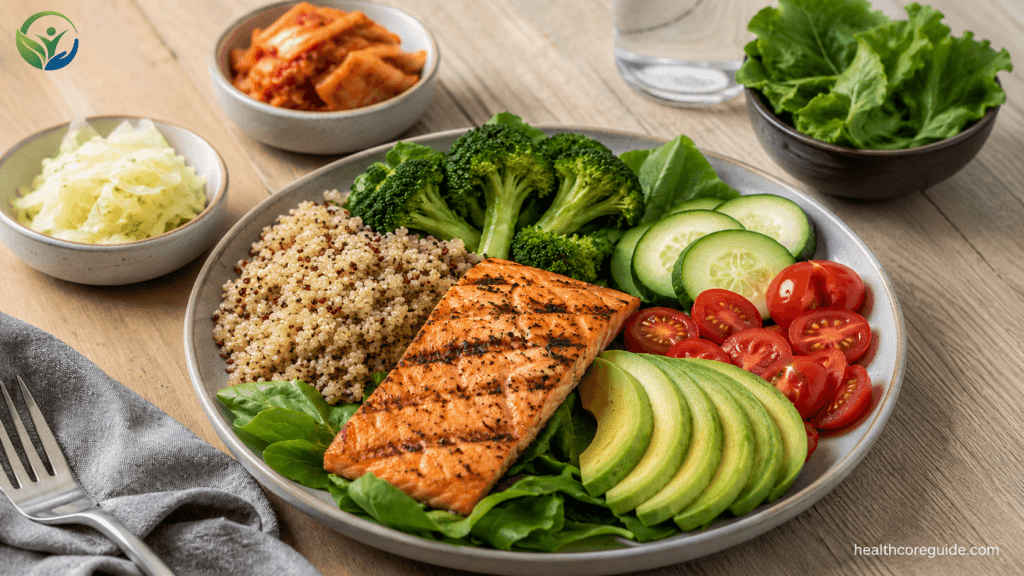
A simple meal structure makes healthy eating much easier. You do not need to overcomplicate every meal. Instead, try building your plate with a simple balance of protein, fiber, vegetables, healthy carbs, and healthy fats.
Use this method:
- Half your plate: vegetables
- One quarter: protein
- One quarter: whole grains or healthy carbs
- Small portion: healthy fats
This method can help you build meals that are filling, balanced, and easier to repeat for gut health.
For example, a simple plate could include grilled chicken, broccoli, brown rice, and a small amount of avocado or olive oil.
For general healthy eating guidance, you can also review CDC healthy eating tips.
Where Supplements Fit In 💊
Food should always come first.
A strong diet built around protein, fiber, vegetables, fruits, whole foods, and enough water is more important than any supplement. However, some supplements can support your routine when used correctly and when they match your actual needs.
For example, fiber supplements can be useful if you struggle to eat enough fiber from food. Glucomannan can support appetite control for some people. Green tea extract is often used for mild metabolism and energy support.
But supplements should never replace real meals, daily movement, sleep, hydration, and consistency.
If you want to compare beginner-friendly options, read our guide to the best weight loss supplements for beginners at the link below.
Link: “Compare the best beginner weight loss supplements.”
Final Thoughts 🌿
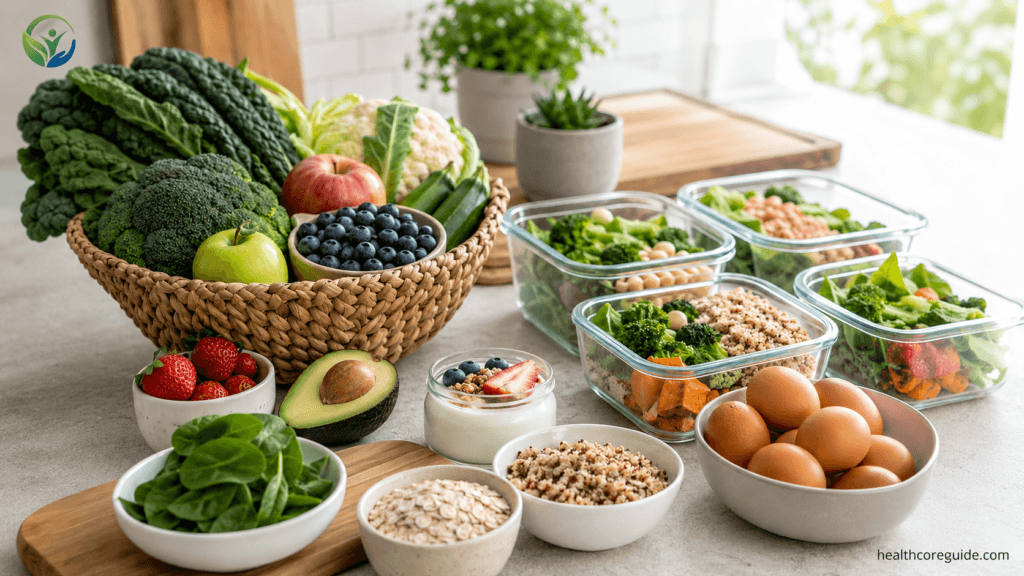
The best foods for gut health and weight loss are simple, realistic, and easy to repeat. You do not need a perfect diet to make progress. Start with a few gut health foods you actually enjoy, then slowly add more variety over time. You need meals that help you feel full, support digestion, and make your routine easier to follow. Focus on meals built around protein, fiber, whole foods, vegetables, fruits, and healthy fats.
Start with small changes:
- Add Greek yogurt to breakfast.
- Eat more oats, berries, beans, and lentils.
- Add vegetables to lunch and dinner.
- Drink more water.
- Use fermented foods if you enjoy them.
- Choose whole foods more often.
- Keep highly processed foods limited.
Over time, these habits can support better digestion, help you feel more satisfied after meals, and make your weight loss routine easier to follow.
For a complete beginner-friendly routine, read our full healthy weight loss guide.
Medical Disclaimer
This article is for informational purposes only and does not constitute medical advice. Always consult a qualified healthcare professional before making major changes to your diet, exercise routine, supplement use, or weight loss plan.