
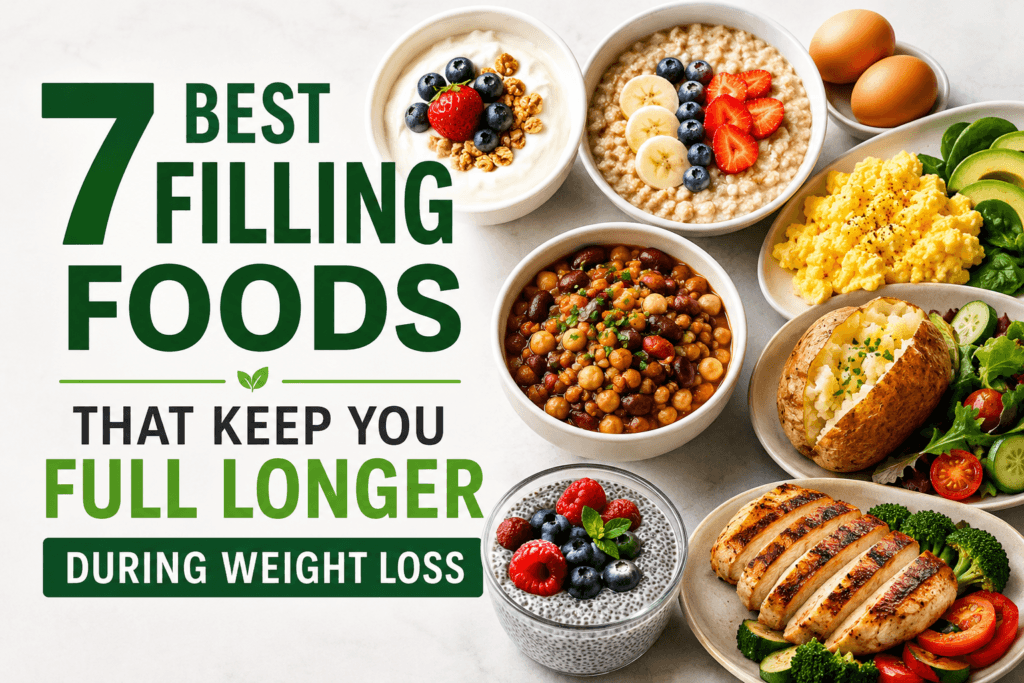
If you feel hungry one hour after eating, the problem may not be your discipline.
The problem may be your food choices.
The right filling foods can make weight loss feel easier because they help you stay satisfied instead of fighting hunger all day.
A lot of people try to lose weight by simply eating less, but they end up choosing meals that are too small, too low in protein, too low in fiber, or too easy to digest. That is when cravings start, snacking becomes harder to control, and the whole plan starts feeling impossible.
Weight loss becomes much easier when your meals actually keep you full. That is why choosing the right filling foods can make the difference between staying consistent and giving up after a few days.
That does not mean you need boring diet food. It means choosing foods that give your body more protein, fiber, volume, and slow-digesting nutrients.
In this guide, we will look at 7 foods that keep you full longer during weight loss, why they work, and how to use them in real meals without making your diet complicated.
If you want a full beginner-friendly routine, read our 7-day healthy weight loss meal plan.
Table of Contents
Why Some Foods Keep You Full Longer
The best filling foods are not always fancy or expensive; they are usually simple foods with protein, fiber, water, or volume. Some foods are more filling because they take longer to digest, contain more protein, contain more fiber, or have more volume for fewer calories.
That matters because hunger is one of the biggest reasons people stop following a weight loss plan.
A meal that keeps you full can help you avoid random snacking, late-night cravings, and large portions later in the day.
The best filling foods usually have one or more of these:
- Protein
- Fiber
- Water
- Healthy fats
- Volume
- Slow-digesting carbohydrates
For a deeper explanation of how fiber works in the body, you can read Harvard’s guide to dietary fiber.
This is why a bowl of Greek yogurt with berries can feel more satisfying than a sugary snack, even if both taste sweet.
Greek Yogurt
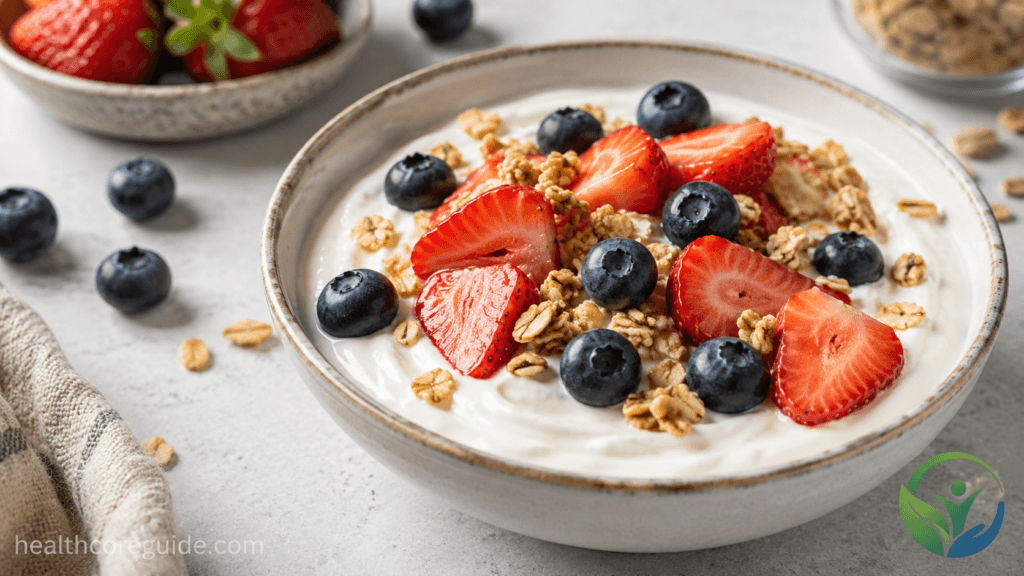
Greek yogurt is one of the easiest filling foods to use when you want something quick, creamy, and high in protein. It is high in protein, simple to prepare, and easy to use as breakfast or a snack.
Best for:
- People who get hungry between meals
- People who want a quick breakfast
- People who crave something creamy or sweet
- People who need more protein without cooking
Why it works:
Protein helps meals feel more satisfying. Greek yogurt can be especially useful in the morning because a low-protein breakfast often leads to hunger later in the day. Instead of eating a sugary cereal that leaves you hungry again quickly, Greek yogurt gives you a stronger base.
How to use it:
- Add berries for natural sweetness
- Add oats for extra fiber
- Add chia seeds for more fullness
- Add cinnamon instead of sugar
Use it as a snack instead of dessert
A simple combo:
Plain Greek yogurt + blueberries + oats + chia seeds.
This gives you protein, fiber, and a sweet taste without relying on highly processed snacks.
Who should skip it:
If you do not tolerate dairy well, Greek yogurt may not be the best option. You can look for lactose-free or high-protein dairy-free alternatives.
Oats
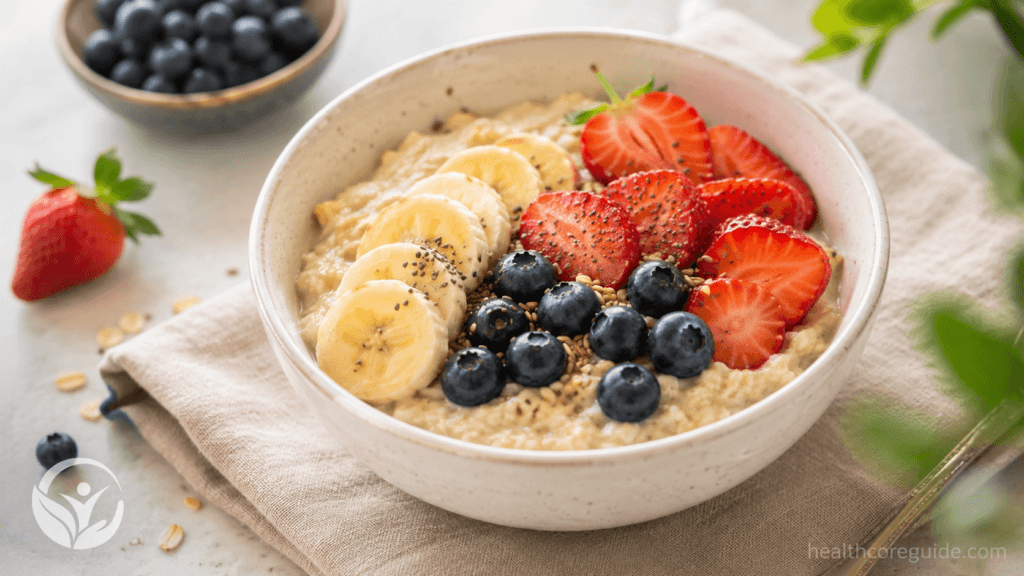
Oats are one of the most affordable filling foods for breakfast because they are easy to prepare and work well with fruit or yogurt.
They are affordable, easy to prepare, and high in fiber. They also work well with other filling foods like Greek yogurt, berries, flaxseed, or protein powder.
Best for:
- People who want a filling breakfast
- People who snack before lunch
- People who want something cheap and easy
- People who like warm meals
Why it works:
Oats contain fiber, which helps meals feel more satisfying. They also take longer to digest than many sugary breakfast foods.
If your current breakfast is toast with jam, cereal, or a sweet pastry, oats may keep you full for longer.
How to use it:
- Make overnight oats
- Cook oatmeal with cinnamon
- Add Greek yogurt after cooking
- Add berries or apple slices
- Add chia seeds or ground flaxseed
A simple combo:
Oats + Greek yogurt + berries + cinnamon.
This is much better than a breakfast that is only sugar and refined carbs.
Mistake to avoid:
Do not turn oats into a dessert by adding too much honey, chocolate, syrup, or peanut butter. Those can still fit sometimes, but portions matter.
Eggs
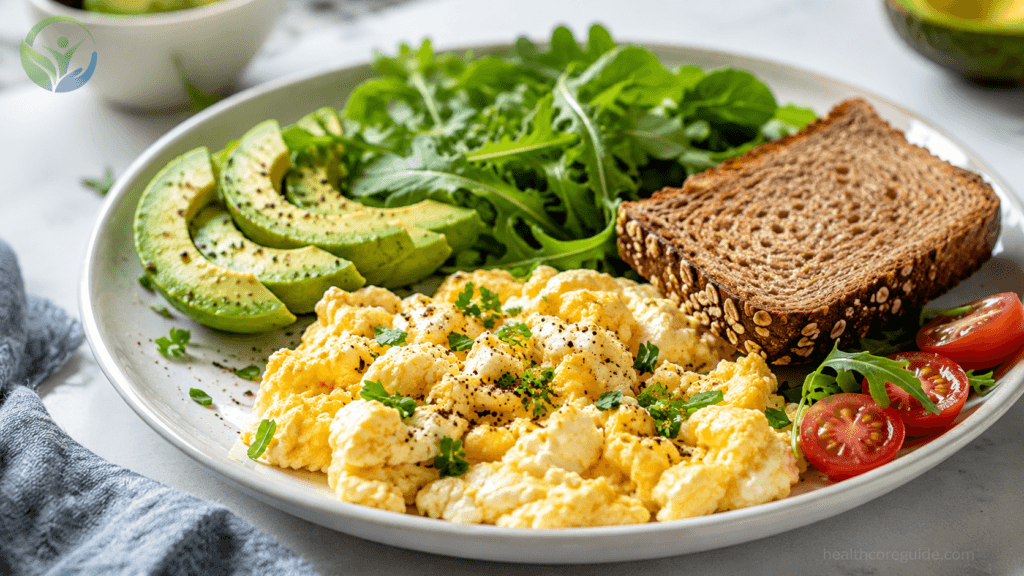
Eggs are simple filling foods that can make breakfast feel more complete without needing a complicated recipe.
They are also easy to combine with vegetables, whole-grain toast, avocado, or potatoes.
Best for:
- People who want a savory breakfast
- People who do not like sweet meals
- People who need quick protein
- People who snack too much in the morning
Why it works:
Eggs contain protein and fat, which can help breakfast feel more complete. A breakfast with eggs often feels more satisfying than a breakfast made only from refined carbs.
How to use them:
- Boiled eggs as a snack
- Scrambled eggs with spinach
- Eggs with whole-grain toast
- Omelet with mushrooms and onions
- Egg bowl with vegetables and potatoes
A simple combo:
Two eggs + spinach + tomatoes + one slice of whole-grain toast.
This gives you protein, volume, and a more balanced start to the day.
Who should be careful:
If you have a medical condition or have been told to manage cholesterol carefully, speak with a healthcare professional about what is best for you.
Beans and Lentils
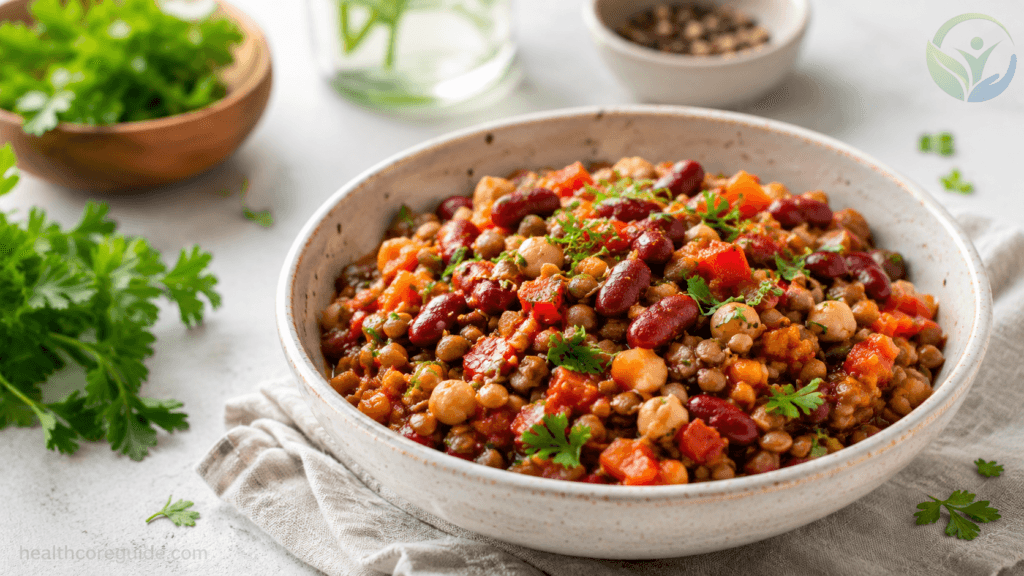
Beans and lentils are underrated weight-loss foods.
They are powerful filling foods because they combine fiber, plant-based protein, and meal volume.
They are filling because they contain both fiber and plant-based protein. That combination makes them useful for people who struggle with hunger, cravings, or large portions.
Best for:
- People who want budget-friendly meals
- People who want more fiber
- People who want plant-based protein
- People who need meals that feel heavier
Why they work:
Beans and lentils add bulk to meals without making them complicated. They can make soups, salads, wraps, and bowls feel much more satisfying.
If you eat a salad and feel hungry after 30 minutes, adding beans or lentils can make a big difference.
How to use them:
- Add lentils to the soup
- Add black beans to bowls
- Add chickpeas to salads
- Use beans in wraps
- Make lentil stew
A simple combo:
Chicken or tofu + rice + black beans + vegetables + salsa.
This type of meal feels filling because it has protein, fiber, carbs, and volume.
Mistake to avoid:
Start slowly if you are not used to eating beans or lentils. Adding too much fiber too quickly can cause bloating or discomfort.
You can also read our guide to gut health foods for weight loss if you want more fiber-rich meal ideas.
Potatoes
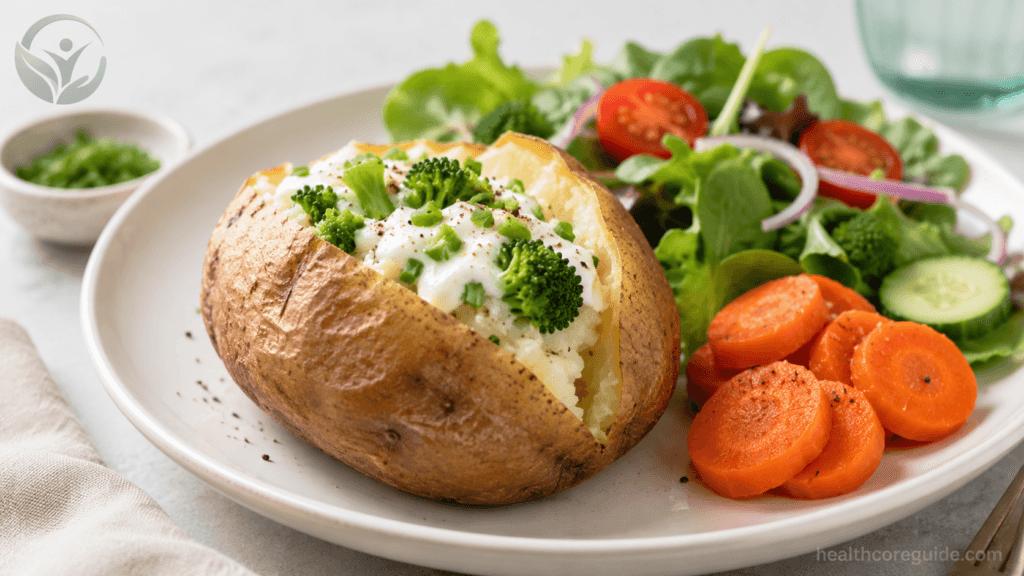
Potatoes are often treated like a “bad” food, but that is not always fair.
The real problem is usually not the potato itself. The problem is how it is prepared and how much is eaten.
Potatoes can be surprisingly filling foods when they are baked or boiled and paired with protein and vegetables.
Best for:
- People who want filling carbs
- People who feel unsatisfied with tiny meals
- People who want a simple dinner side
- People who enjoy warm comfort foods
Why they work:
Potatoes have volume and can make meals feel more satisfying. They are also much different when baked or boiled compared with fries or chips.
How to use them:
- Baked potato with Greek yogurt sauce
- Boiled potatoes with chicken and salad
- Potatoes with eggs and vegetables
- Sweet potato with turkey or beans
A simple combo:
Salmon + boiled potatoes + broccoli.
This meal gives protein, fiber, carbs, and volume.
Mistake to avoid:
Do not confuse potatoes with fried potato products. Fries, chips, and heavily loaded potatoes can become very high in calories.
Chia Seeds
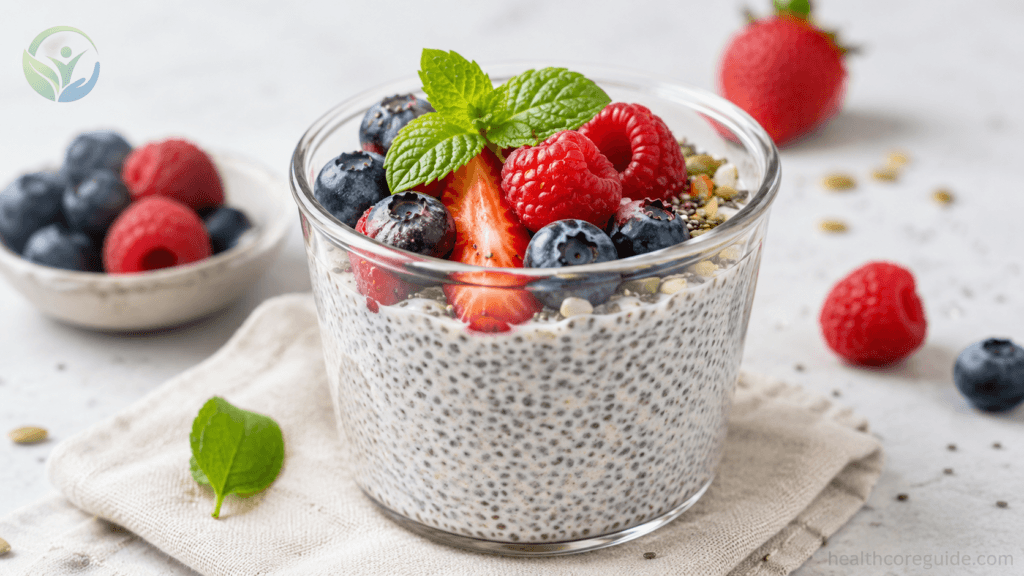
Chia seeds are small, but they can make meals feel more filling.
Chia seeds are useful filling foods because they absorb liquid and make yogurt, oats, or smoothies feel thicker.
Best for:
- People who want more fiber
- People who like yogurt or oats
- People who want small add-ons that increase fullness
- People who struggle with snack cravings
Why they work:
Chia seeds provide fiber and can help make meals feel thicker and more satisfying.
They are not a magic weight loss food, but they are useful when added to meals that are already balanced.
How to use them:
- Add to Greek yogurt
- Add to oats
- Add to smoothies
- Make chia pudding
- Mix into breakfast bowls
A simple combo:
Greek yogurt + berries + chia seeds.
This is one of the easiest snack upgrades for weight loss.
Mistake to avoid:
Do not eat large amounts immediately if you are not used to fiber. Start with a small amount and drink enough water.
Chicken Breast or Lean Protein
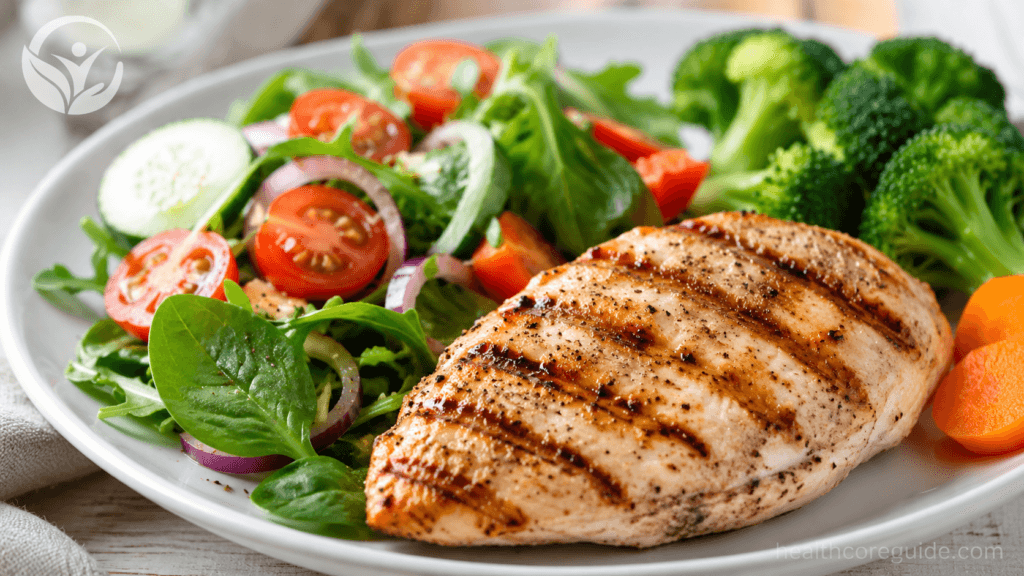
Lean protein foods like chicken breast, turkey, tuna, fish, tofu, or cottage cheese can make meals much easier to follow.
Lean protein options are important filling foods because they help meals feel more satisfying and easier to repeat. A lot of people struggle with weight loss because their meals are mostly carbs and fats, with very little protein.
Best for:
- People who feel hungry after lunch
- People who snack at night
- People who want easier meal prep
- People who train or walk regularly
Why it works:
Protein helps meals feel more complete. It also supports muscle maintenance, which matters when you are losing weight.
You can also read Harvard’s guide to protein if you want to compare different protein sources like poultry, fish, beans, nuts, eggs, and dairy.
If your lunch is only pasta, bread, or a small salad, you may feel hungry quickly. Adding lean protein can make the meal more satisfying.
How to use it:
- Grilled chicken salad
- Turkey rice bowl
- Tuna wrap
- Cottage cheese snack
- Tofu stir-fry
- Fish with vegetables and rice
A simple combo:
Chicken breast + rice + vegetables + olive oil dressing.
This is simple, filling, and easy to repeat.
Mistake to avoid:
Do not make your meals only protein. You still need vegetables, fiber-rich carbs, and healthy fats for a balanced routine.
Best Filling Foods for Different Problems
If your problem is morning hunger:
- Choose Greek yogurt, eggs, or oats.
If your problem is late-night snacking:
- Add more protein at dinner and more fiber during the day.
If your problem is cravings:
- Try Greek yogurt with berries, oats, apples, chia seeds, or a meal with beans and protein.
If your problem is portions:
- Use potatoes, beans, lentils, vegetables, and lean protein to build bigger meals without relying on highly processed foods.
If your problem is low energy:
- Use balanced meals with protein, healthy carbs, and enough calories instead of trying to eat too little.
How to Build a Filling Weight Loss Plate
A filling plate does not need to be complicated.
Try this structure:
- One protein source
- One fiber-rich carb
- One or two vegetables
- A small amount of healthy fat
For example:
- Chicken + potatoes + broccoli + olive oil
- Greek yogurt + oats + berries + chia seeds
- Eggs + vegetables + whole-grain toast
- Beans + rice + salad + avocado
This is more useful than just telling yourself to “eat less.”
These filling foods work best when you combine protein, fiber, and volume instead of relying on one small low-calorie meal.
When your meals are built properly, you are less likely to feel hungry all day.
Final Thoughts
The best weight loss foods are not always the lowest-calorie foods. The best foods are the ones that help you stay full, reduce cravings, and make your routine easier to repeat. These filling foods are simple, realistic, and easier to use every day than trying to survive on tiny meals.
If you are always hungry during weight loss, start by improving your meal structure before blaming your discipline.
Greek yogurt, oats, eggs, beans, lentils, potatoes, chia seeds, and lean protein can all help meals feel more satisfying.
You do not need to eat all of them every day. Start with two or three filling foods you actually enjoy, then build your meals around them more often.
If hunger is only one part of your struggle, read our guide on why weight loss is hard and how to fix it.
Medical Disclaimer
This article is for informational purposes only and does not constitute medical advice. Always consult a qualified healthcare professional before making major changes to your diet, exercise routine, supplement use, or weight loss plan.