
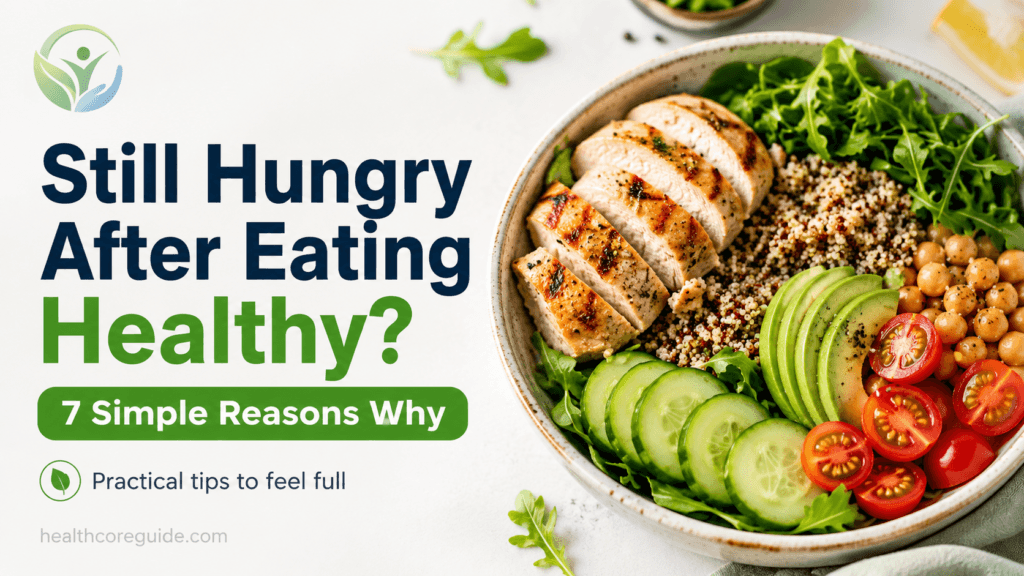
Still Hungry After Eating Healthy? 7 Reasons Why
If you are eating healthy but still feel hungry all the time, you are not alone.
A lot of people start a weight-loss routine with salads, fruit, smoothies, toast, or small “clean” meals, then wonder why they feel hungry again within an hour.
The problem is not always discipline.
If you still feel hungry after a healthy meal, your body may simply need a better balance of protein, fiber, carbs, and healthy fats. Sometimes the meal is healthy, but it is not built to keep you full.
If hunger is one of your biggest struggles during weight loss, you may also like our guide to “7 filling foods that keep you full longer.” It gives specific food ideas you can use for breakfast, lunch, dinner, and snacks.
A small salad can be healthy, but if it has almost no protein, fiber, carbs, or healthy fats, it may leave you thinking about snacks soon after eating. A smoothie can look healthy, but if it is mostly fruit juice and not enough protein, it may not feel like a real meal.
That is why many people feel like they are doing everything right but still struggle with cravings, snacking, and overeating later in the day.
In this guide, we will break down why you may still feel hungry after eating healthy, what your meals might be missing, and how to build meals that actually help you stay satisfied longer.
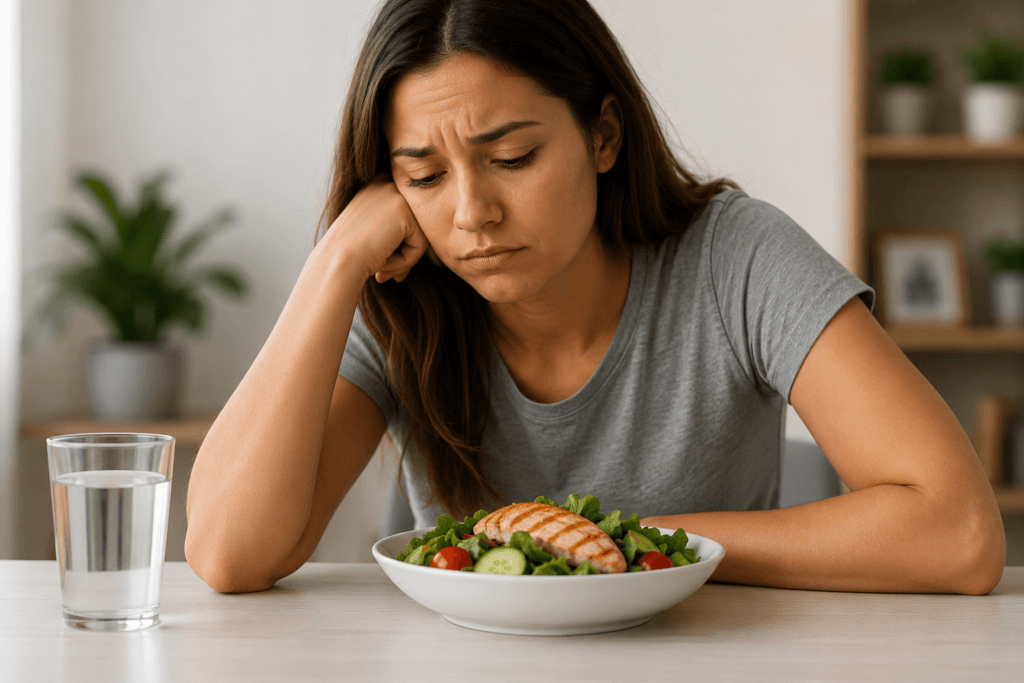
Table of Contents
Why “Healthy” Does Not Always Mean Filling
This is where many people get confused.
A food can be healthy and still not be filling enough.
For example, fruit is healthy, but fruit alone may not keep you full for long. A salad is healthy, but a salad with only lettuce, cucumber, and tomato may feel too light. A smoothie can be healthy, but it can also disappear quickly, leaving you wanting more food.
Fullness usually comes from a combination of things:
- Protein
- Fiber
- Meal volume
- Healthy fats
- Slow-digesting carbs
- Enough total food
When a meal is missing too many of these, hunger comes back quickly.
That does not mean you need to eat huge meals. It means your meals need better structure. The goal is not to eat less and suffer. The goal is to eat smarter so your meals actually work for you.
Reason 1 — Your Meal Is Too Low in Protein
One of the biggest reasons people feel hungry after eating healthy is simple: the meal does not have enough protein. This often happens with meals like fruit bowls, plain salads, toast, cereal, smoothies, or vegetable-only meals.
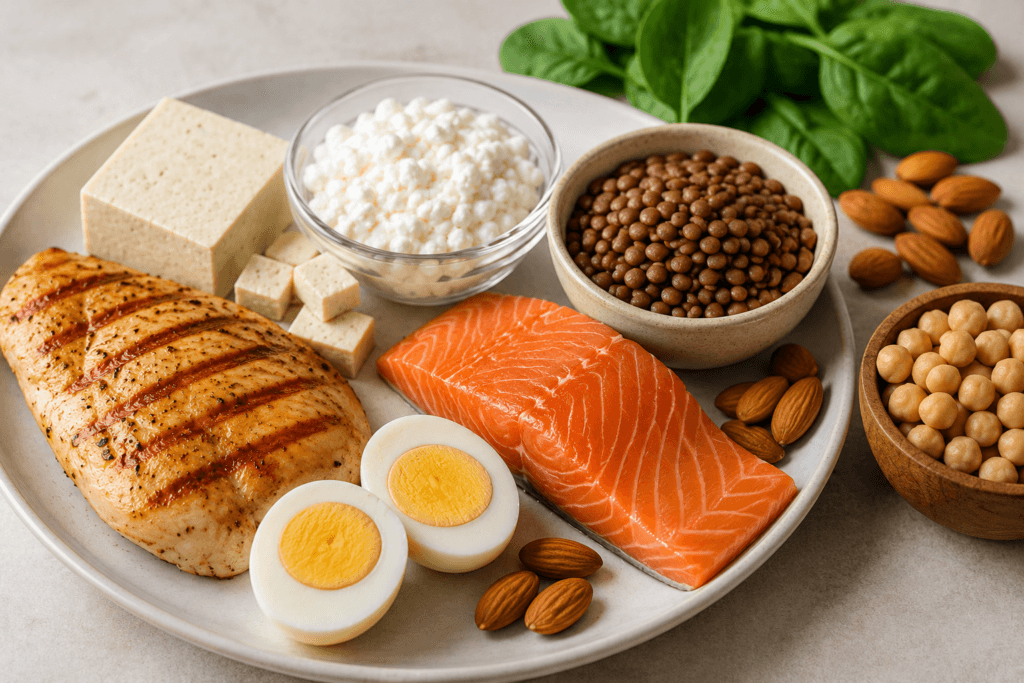
They may look clean and healthy, but they do not always give your body enough protein to feel satisfied.
Protein helps meals feel more complete. It also supports muscle maintenance, which matters during weight loss. A low-protein breakfast can easily lead to hunger before lunch. A low-protein lunch can make you snack all afternoon. A low-protein dinner can make late-night cravings worse.
Examples of low-protein “healthy” meals:
- A plain salad with no chicken, eggs, tuna, beans, tofu, or Greek yogurt dressing
- Toast with jam
- Fruit only
- A smoothie made mostly from fruit juice
- Vegetable soup with no protein source
How to fix it:
- Add a protein source to every main meal.
Good options include:
- Greek yogurt
- Eggs
- Chicken breast
- Turkey
- Tuna
- Salmon
- Cottage cheese
- Beans
- Lentils
- Tofu
- Lean beef
A better meal example:
Instead of eating only a salad, make it a chicken salad with beans, avocado, and a small portion of rice or potatoes. That meal is still healthy, but now it is much more filling.
Reason 2 — Your Meal Has Almost No Fiber
Fiber is one of the most important parts of a filling meal.
If your meal is low in fiber, it may digest too quickly and leave you hungry again soon after eating.
This is common when people eat refined carbs or small meals that do not include enough vegetables, beans, oats, fruit, or whole grains. Fiber helps add bulk to meals and makes them feel more satisfying.
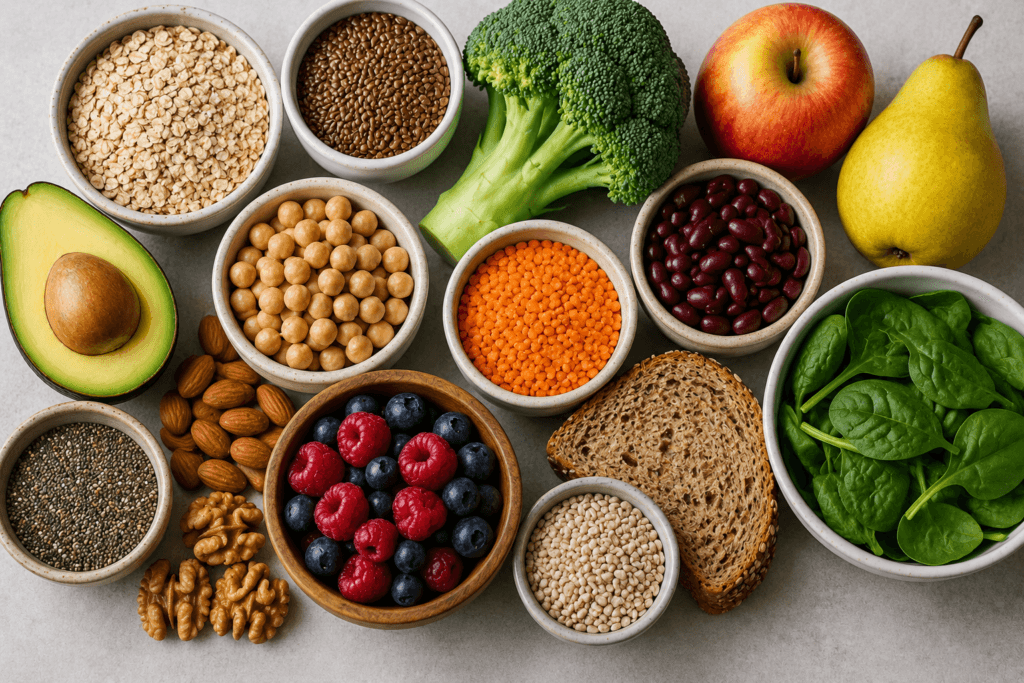
Low-fiber meals often include:
- White bread with very little else
- Sugary cereal
- Low-fiber snacks
- Pastries
- Juice instead of whole fruit
- Small meals with no vegetables
How to fix it:
- Add one fiber-rich food to each meal.
Good options include:
- Oats
- Beans
- Lentils
- Chia seeds
- Flaxseed
- Berries
- Apples
- Broccoli
- Leafy greens
- Whole grains
- Potatoes with skin
A better meal example:
Instead of having only eggs for breakfast, add oats, berries, or whole-grain toast on the side. Instead of eating only chicken for lunch, add beans, vegetables, or potatoes. Fiber makes meals feel bigger, slower, and more satisfying.
You can also read Harvard’s guide to protein if you want to compare different protein sources like poultry, fish, eggs, dairy, beans, nuts, and seeds.
Reason 3 — You Are Eating “Clean” but Too Little
This is one of the most common mistakes.
People start eating cleaner, but they also make their meals too small. They remove snacks, sweets, bread, rice, pasta, sauces, oils, and desserts all at once. Then their meals become tiny, and hunger gets intense.
Eating healthy does not mean eating as little as possible.
If your meals are too small, your body will eventually push back with hunger, cravings, low energy, and overeating later. This is why some people feel perfect in the morning, but by night, they lose control around snacks.
The problem may not be weakness. The problem may be that the day started with meals that were too light.
Signs your meals may be too small:
- You feel hungry again within 60–90 minutes
- You think about food all day
- You snack more at night
- You feel low energy
- You feel unsatisfied after meals
- You keep craving sweets after eating
How to fix it:
- Build meals that are healthy but still satisfying.
A filling meal should usually include:
- Protein
- Fiber-rich carbs
- Vegetables or fruit
- A small amount of healthy fat
- Enough volume
A better meal example:
Instead of eating only grilled chicken and lettuce, add potatoes, beans, rice, avocado, or Greek yogurt sauce. The meal can still support weight loss, but it will feel much more realistic.
Reason 4 — Your Breakfast Is Too Light
A light breakfast can set up the whole day for hunger.
Many people eat something small in the morning because they want to “save calories.” But then they feel hungry, tired, and snacky later. A breakfast like coffee only, fruit only, toast only, or a small cereal bowl may not keep you full for long.
This does not mean everyone needs a huge breakfast. But if you are hungry all morning, your breakfast probably needs more structure.
Weak breakfast examples:
- Coffee only
- Fruit only
- Toast with jam
- Sugary cereal
- A small smoothie with no protein
- A pastry or sweet snack
Better breakfast examples:
- Greek yogurt with oats and berries
- Eggs with vegetables and whole-grain toast
- Oatmeal with Greek yogurt and chia seeds
- Cottage cheese with fruit
- Eggs with potatoes and spinach
Why this works:
A better breakfast gives your body more protein, fiber, and slow-digesting nutrients. That can make the rest of the day easier. If breakfast leaves you hungry, don’t just blame your appetite. Upgrade the meal.
Reason 5 — You Are Drinking Calories Instead of Eating Filling Food
Liquid calories can be tricky.
Smoothies, juices, sweet coffee drinks, and “healthy” drinks can still add calories, but they often do not keep you full the same way solid food does. This is especially true when a smoothie is mostly fruit juice, honey, sweetened yogurt, or too much peanut butter.
It may look healthy, but it can still be digested quickly and leave you wanting more.
Common drinks that may not keep you full:
- Fruit juice
- Sweet coffee drinks
- Large smoothies with little protein
- Energy drinks
- Sweet tea
- Flavored milk drinks
- High-sugar “wellness” drinks
How to fix it:
- Do not rely on drinks as your main meal unless they are built properly.
A better smoothie should include:
- Protein source
- Fiber source
- Fruit
- Optional healthy fat
- No unnecessary added sugar
Better smoothie example:
Greek yogurt + berries + chia seeds + water or milk.
This is more filling than fruit juice with banana and honey. Even better, eat whole foods when possible. A bowl of Greek yogurt with berries and oats often feels more satisfying than drinking the same calories quickly.
Reason 6 — You Are Avoiding Carbs Too Much
Some people feel hungry because they cut carbs too aggressively.
They remove rice, potatoes, oats, bread, fruit, beans, and grains, then wonder why meals feel empty. Carbs are not automatically bad. The type, portion, and combination matter.
High-fiber and slow-digesting carbs can make meals feel more satisfying, especially when paired with protein and vegetables.
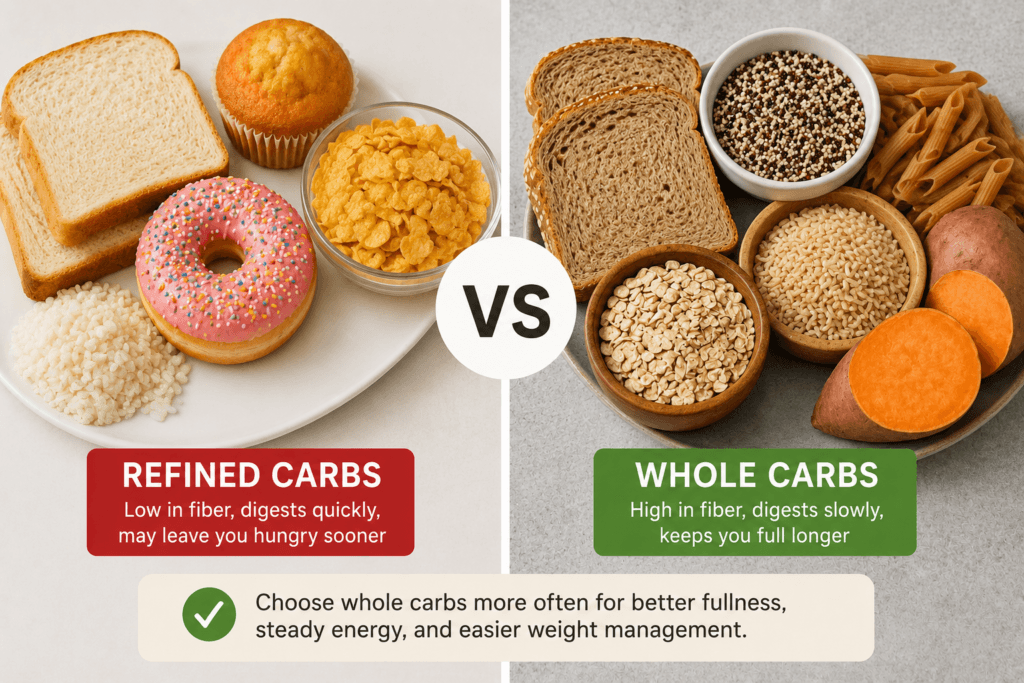
Better carb options include:
- Oats
- Potatoes
- Sweet potatoes
- Beans
- Lentils
- Brown rice
- Whole grains
- Fruit
- Quinoa
- Whole-grain bread
The mistake is not eating carbs. The mistake is building meals around refined carbs, sugary snacks, and oversized portions without enough protein or fiber.
A better meal example:
Chicken + potatoes + broccoli + olive oil dressing.
That is more filling than chicken and lettuce alone.
Another example:
Greek yogurt + oats + berries + chia seeds.
That gives carbs, protein, fiber, and volume in one meal. If avoiding carbs makes you hungry and inconsistent, your plan may be too strict.
Reason 7 — Your Meal Has No Healthy Fats
Healthy fats can help meals feel more satisfying, but many people remove them completely when trying to lose weight. This can make meals feel dry, boring, and less satisfying.
Fat is calorie-dense, so portions matter. But cutting it out completely can make healthy eating harder to stick with.
Good healthy fat options include:
- Avocado
- Olive oil
- Nuts
- Seeds
- Salmon
- Eggs
- Peanut butter in small portions
- Chia seeds
- Flaxseed
The key is balance.
You do not need to cover everything in oil or eat large amounts of nuts. A small amount can make meals taste better and feel more complete.
A better meal example:
A salad with grilled chicken, beans, vegetables, and a small amount of avocado will usually feel more satisfying than plain lettuce with low-calorie dressing.
Another example:
Oats with berries and chia seeds can feel more complete than plain oats with nothing added. Healthy fats should support the meal, not take over the meal.
Best Meal Upgrades That Keep You Full
You do not need to completely change your diet.
Sometimes, one small upgrade can make a healthy meal much more filling.
Try these simple upgrades:
- Add Greek yogurt to oats
- Add eggs to breakfast
- Add beans to salads
- Add lentils to the soup
- Add potatoes to dinner
- Add chia seeds to yogurt
- Add chicken or tuna to wraps
- Add avocado to a small portion
- Add vegetables for volume
- Add berries instead of candy or sweets
The goal is to stop building meals that are “healthy but too weak.”
A better weight loss meal should feel satisfying enough that you can repeat it tomorrow.
That is the real secret. Not perfect meals. Repeatable meals.
This idea is similar to Harvard’s Healthy Eating Plate, which focuses on vegetables, whole grains, healthy protein, healthy oils, and water instead of sugary drinks.
Examples of Better Meals
Here are simple examples of meals that are healthy and more filling.
Breakfast idea 1:
- Greek yogurt + oats + blueberries + chia seeds.
This works well because it gives protein, fiber, and natural sweetness.
Breakfast idea 2:
- Eggs + spinach + tomatoes + whole-grain toast.
This is a good option if you prefer savory meals.
Lunch idea 1:
- Chicken salad with beans, vegetables, and avocado.
This is much more filling than a plain salad.
Lunch idea 2:
- Tuna wrap with vegetables and Greek yogurt sauce.
This gives protein and texture without making the meal complicated.
Dinner idea 1:
- Salmon + potatoes + broccoli.
This gives protein, carbs, fiber, and healthy fats.
Dinner idea 2:
- Lentil bowl with rice, vegetables, and a small amount of olive oil.
This works well for people who want more plant-based meals.
Snack idea:
- Greek yogurt with berries or apple slices with peanut butter.
A snack should help you feel satisfied, not make you hungrier.
What to Do If You Get Hungry at Night
Night hunger is not always a nighttime problem. Sometimes it starts earlier in the day.
If you feel hungry every night, the real issue may be that your earlier meals were too small, too low in protein, or not filling enough.
If you eat a tiny breakfast, a light lunch, and a low-protein dinner, your body may push you toward snacks at night.
Before blaming your discipline, look at your meal structure.
Ask yourself:
- Did I eat enough protein today?
- Did I eat enough fiber?
- Was my breakfast too small?
- Was lunch mostly carbs?
- Did I avoid carbs too much?
- Did I drink calories instead of eating real food?
- Did I go too long without a proper meal?
Better night hunger strategy:
- Eat a stronger breakfast
- Add protein to lunch
- Add fiber during the day
- Do not make dinner too tiny
- Keep a planned snack ready
A good planned snack could be:
- Greek yogurt with berries
- Cottage cheese with fruit
- Boiled eggs
- Apple with peanut butter
- Oats with cinnamon
Do not wait until you are extremely hungry and then hope willpower saves you.
Build your day in a way that makes night hunger easier to manage.
Recommended Reading
If hunger is making weight loss harder, start with our guide on “7 filling foods that keep you full longer.”
You can also read our “7-day healthy weight loss meal plan”, if you want simple meal ideas for beginners.
If your weight loss progress feels stuck, read our guide on “Why weight loss is hard and how to fix it.”
For more fiber-rich meal ideas, read our guide to “Gut health foods for weight loss.”
Final Thoughts
If you are still hungry after eating healthy, it does not always mean you are doing everything wrong. It may simply mean your meals are missing the things that make food satisfying.
A healthy meal should not leave you fighting hunger all day.
When meals are built correctly, you should feel satisfied instead of constantly hungry and looking for snacks. The most filling meals usually include protein, fiber, volume, slow-digesting carbs, and a small amount of healthy fats.
Start by upgrading one meal. Add protein to breakfast. Add beans to lunch. Add potatoes or vegetables to dinner. Add chia seeds or berries to a snack.
Small changes like this can make healthy eating feel much easier.
The goal is not to eat perfectly. The goal is to build meals that help you stay full, reduce cravings, and stay consistent long enough to see progress.
Medical Disclaimer
This article is for informational purposes only and does not constitute medical advice. Always consult a qualified healthcare professional before making major changes to your diet, exercise routine, supplement use, or weight loss plan.