
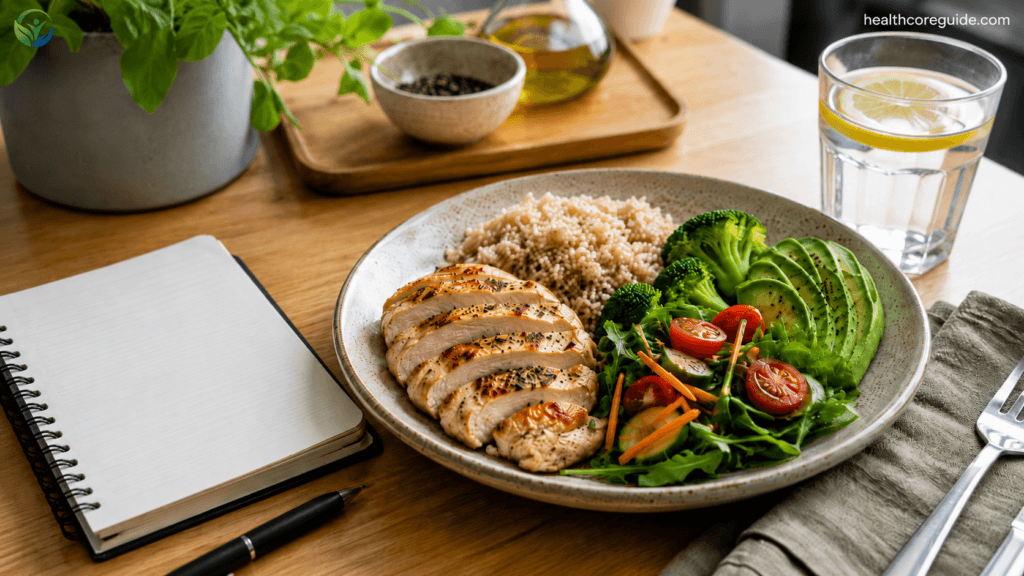
If your diet feels easy during the day but falls apart at night, you are not alone.
Many people start the day with good intentions. They eat a light breakfast, try to make healthy choices, drink water, avoid snacks, and feel like they are “doing everything right.”
Then night comes.
Suddenly, the cravings feel stronger. Snacks look more tempting. A small bite turns into a full plate. You tell yourself you will restart tomorrow, but the same thing happens again.
The problem is not always a lack of discipline.
Night overeating often starts earlier in the day. It can come from eating too little, avoiding foods you actually enjoy, feeling stressed, being tired, or building an evening routine around snacks.
This article will break down why your diet fails at night, why cravings feel harder after dinner, and how to make your evenings easier without using extreme rules.
If hunger is one of the reasons you struggle at night, you can also read our guide to “7 filling foods that keep you full longer.”
Quick Truth — Night Cravings Usually Start Before Night
Most people think the problem is the snack they eat at 10 PM. But many nighttime cravings are created much earlier.
If breakfast was too small, lunch was rushed, dinner was not satisfying, and the whole day felt stressful, your brain and body may push you toward quick comfort at night. That is why telling yourself “just stop snacking” usually does not work for long.
A better question is:
What happened earlier today that made night cravings feel so strong?
- Sometimes the answer is hunger.
- Sometimes it is stress.
- Sometimes it is boredom.
- Sometimes it is a habit.
- Sometimes it is a restriction.
Once you understand the reason, it becomes much easier to fix the pattern.
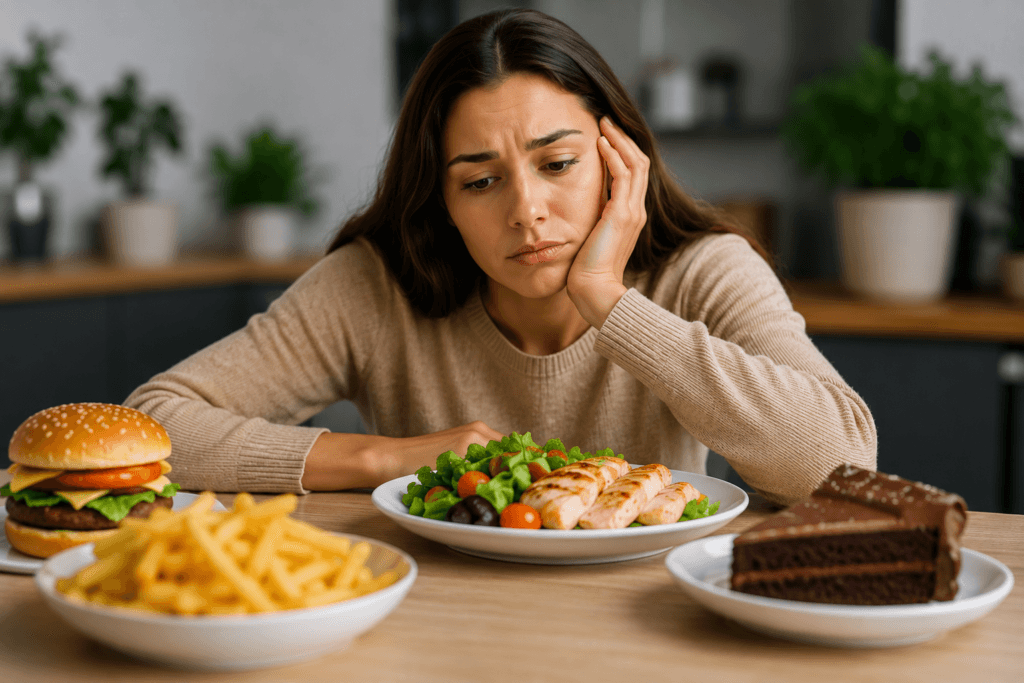
Table of Contents
Reason 1 — You Ate Too Little Earlier in the Day
One of the biggest reasons a diet fails at night is that the daytime meals were too light. This is very common.
Someone may skip breakfast, eat a small lunch, avoid snacks, and then expect to stay perfectly in control at night. But by the evening, hunger has built up.
At that point, cravings are not just about food. They are also about your body trying to catch up.
Signs this may be your problem:
- You feel proud of eating very little during the day
- You get very hungry after dinner
- You feel like snacks are impossible to ignore at night
- You often say, “I was good all day, then ruined it.”
- You wake up the next day wanting to restrict again
How to fix it:
Do not try to “save” all your calories for the night. Build better meals earlier in the day so you are not relying on willpower later.
A stronger day might include:
- A real breakfast
- A satisfying lunch
- Enough water
- A balanced dinner
- A planned snack if needed
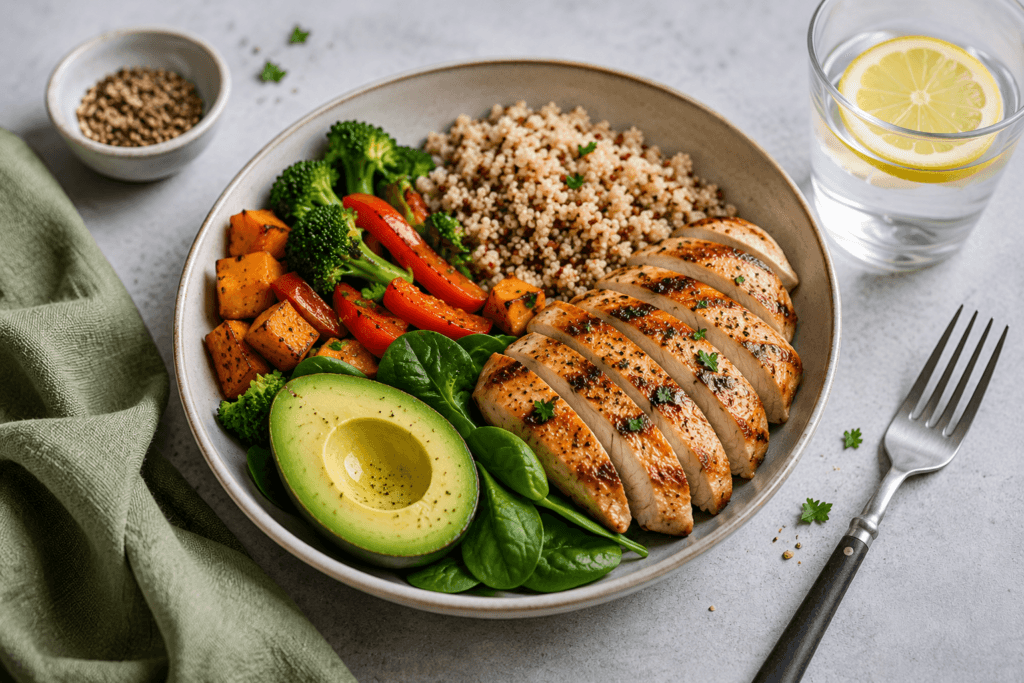
Eating enough during the day does not mean overeating. It means giving your body enough structure so that the night does not become a battle.
Reason 2 — Your Meals Are Not Satisfying Enough
Your meals can be healthy and still not satisfying enough. This is where many diets fail.
A small salad, plain toast, fruit, cereal, or a vegetable-only meal may look healthy, but it may not keep you full for long if it is missing protein, fiber, carbs, or healthy fats. When meals feel too light, cravings often show up later.
This is especially common at night because the body has had the whole day to build up hunger.
Weak meal examples:
- Toast with jam for breakfast
- A small salad with no protein
- A smoothie made mostly from fruit
- Pasta with very little protein
- Soup with almost no beans, meat, tofu, or lentils
- A dinner that is only chicken and lettuce
Better meal upgrades:
- Add eggs to breakfast
- Add Greek yogurt to oats
- Add beans to salads
- Add lentils to the soup
- Add potatoes to dinner
- Add tuna, chicken, tofu, or salmon to meals
- Add avocado or olive oil in small portions
A satisfying meal does not need to be huge. It just needs the right structure.
For example, chicken with potatoes, vegetables, and olive oil dressing will usually feel more satisfying than plain chicken and lettuce.
If your meals do not feel complete, nighttime cravings become much harder to control.
Reason 3 — Your Diet Feels Too Strict or Boring
A diet that feels too strict can work for a few days, but it often fails at night.
During the day, you may be able to follow rules like:
- No bread.
- No sweets.
- No snacks.
- No carbs.
- No eating after dinner.
- No mistakes.
But the more rules you create, the more pressure builds. By night, when you are tired, stressed, or bored, those rules become much harder to follow. A boring diet can cause the same problem.
If every meal is plain, dry, repetitive, or tasteless, your brain may start looking for something exciting later. That is why people can eat a “healthy” dinner and still want something sweet or salty right after.
Sometimes the craving is not only hunger. Sometimes it is a desire for flavor, comfort, texture, or reward.

How to fix it:
- Make healthy meals taste better and stop making your diet feel like a punishment.
Use simple upgrades like:
- Salsa
- Greek yogurt sauce
- Garlic
- Lemon
- Herbs
- Cinnamon
- Mustard
- Low-sugar marinades
- Berries
- Small portions of avocado or olive oil
A diet does not need to be perfect to work. It needs to be repeatable. If your meals taste good and feel satisfying, you are less likely to search for snacks at night.
Reason 4 — You Are Tired, Stressed, or Eating on Autopilot
At night, cravings are not always real hunger. Sometimes they come from tiredness, stress, boredom, or habit. After a long day, food becomes an easy way to relax. It is quick, available, and comforting. This is why cravings can feel stronger when you are watching TV, scrolling on your phone, gaming, or sitting alone after dinner.
The routine becomes automatic:
- Couch = snacks
- Movie = chips
- Scrolling = sweets
- Gaming = soda
- Stress = chocolate
This pattern can be powerful because it repeats every night.
Signs this may be your problem:
- You eat because you feel bored or stressed
- You keep going back to the kitchen without thinking
- You are not hungry for a real meal, only snacks
- You snack more when you stay up late
How to fix it:
Change the routine, not just the food.
Try:
- Drink tea after dinner
- Brush your teeth earlier
- Go for a short walk
- Prepare tomorrow’s breakfast
- Keep your hands busy
- Move to a different room
- Set a kitchen “closed” time
- Go to bed before cravings get stronger
Sometimes the best weight loss move at night is not another rule. It is building a calmer routine.

Reason 5 — Trigger Foods Are Too Easy to Reach
Some foods are harder to control than others.
This does not mean the food is “bad.” It means it may be difficult for you to keep up when you are tired, stressed, or craving something quick. Trigger foods are different for everyone.
For one person, it may be chocolate. For another person, it may be chips, cookies, cereal, ice cream, bread, or peanut butter.
The problem is not just the food. The problem is how easy it is to reach. If a trigger food is visible, open, and close to you, you are more likely to eat it at night.
Simple fixes:
- Do not keep trigger foods on the counter
- Put snacks in harder-to-reach places
- Buy single portions instead of large packs
- Keep healthier snacks ready
- Do not eat from the package
- Use a bowl or plate
- Make the better option easier
A good environment helps you make better choices when motivation is low. That matters more at night than during the day. You do not need to remove every food you enjoy. But if one food keeps causing the same problem, make it less automatic.
What to Eat Earlier to Prevent Night Cravings
If you want fewer night cravings, start earlier in the day. You do not need a perfect diet. You need meals that keep you steady.
A better day could look like this:
| Breakfast: | Lunch: | Dinner: | Snack if needed: |
|---|---|---|---|
| Greek yogurt with oats and berries | Chicken bowl with rice, beans, vegetables, and salsa | Salmon with potatoes and broccoli | Greek yogurt with berries |
| Eggs with vegetables and whole-grain toast | Tuna wrap with salad and fruit | Lentil bowl with rice, vegetables, and olive oil | Boiled eggs |
The key is not to starve all day and hope night goes perfectly. A steady day creates a calmer night.
Simple Night Routine That Supports Weight Loss
A good night routine does not need to be complicated. It just needs to reduce autopilot snacking.
Try this:
- Eat a satisfying dinner
- Clean the kitchen after dinner
- Make tea or water
- Prepare tomorrow’s breakfast
- Brush your teeth
- Put snacks away
- Turn off screens earlier if possible
- Go to bed before cravings become stronger
For general guidance on sleep habits, you can also read the CDC’s sleep hygiene tips, which explain how a consistent routine and better sleep environment can support healthier sleep.
You do not need to follow every step perfectly. Even one or two changes can help.
For example, brushing your teeth after dinner can signal that eating is done. Making tea can replace the habit of snacking while sitting down. Preparing breakfast can remind you that tomorrow has a plan.
Small routines work because they reduce decisions. At night, fewer decisions usually mean fewer mistakes.
Recommended Reading
If hunger is one of the biggest reasons your diet fails at night, read our guide to ” 7 filling foods that keep you full longer.”
If you often feel hungry even after healthy meals, read our guide on “Why you may still be hungry after eating healthy.”
If you want more meal ideas, read our “7-day healthy weight loss meal plan.”
For more fiber-rich options, read our guide to “Gut health foods for weight loss.”
Final Thoughts
If your diet fails at night, it does not mean you are weak. It usually means something in your day, your routine, or your environment needs to change.
Maybe you ate too little earlier.
Maybe your meals were not satisfying enough.
Maybe your diet felt too strict.
Maybe your evening routine was built around snacks.
Maybe trigger foods were too easy to reach.
The solution is not to punish yourself the next morning. The solution is to understand the pattern and make the next night easier.
Start with one change.
- Eat a better breakfast.
- Make lunch more satisfying.
- Plan an evening snack.
- Put trigger foods out of sight.
- Go to bed earlier.
Small changes can make night cravings easier to manage and help your weight loss routine feel much more realistic.
Medical Disclaimer
This article is for informational purposes only and does not constitute medical advice. Always consult a qualified healthcare professional before making major changes to your diet, exercise routine, supplement use, or weight loss plan.